Showing posts with label artists. Show all posts

18 January 2016

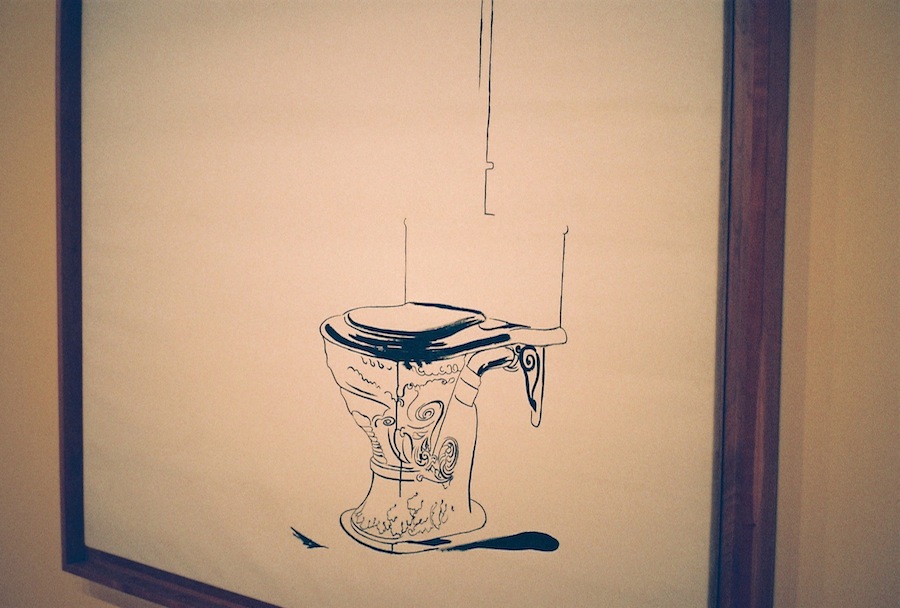
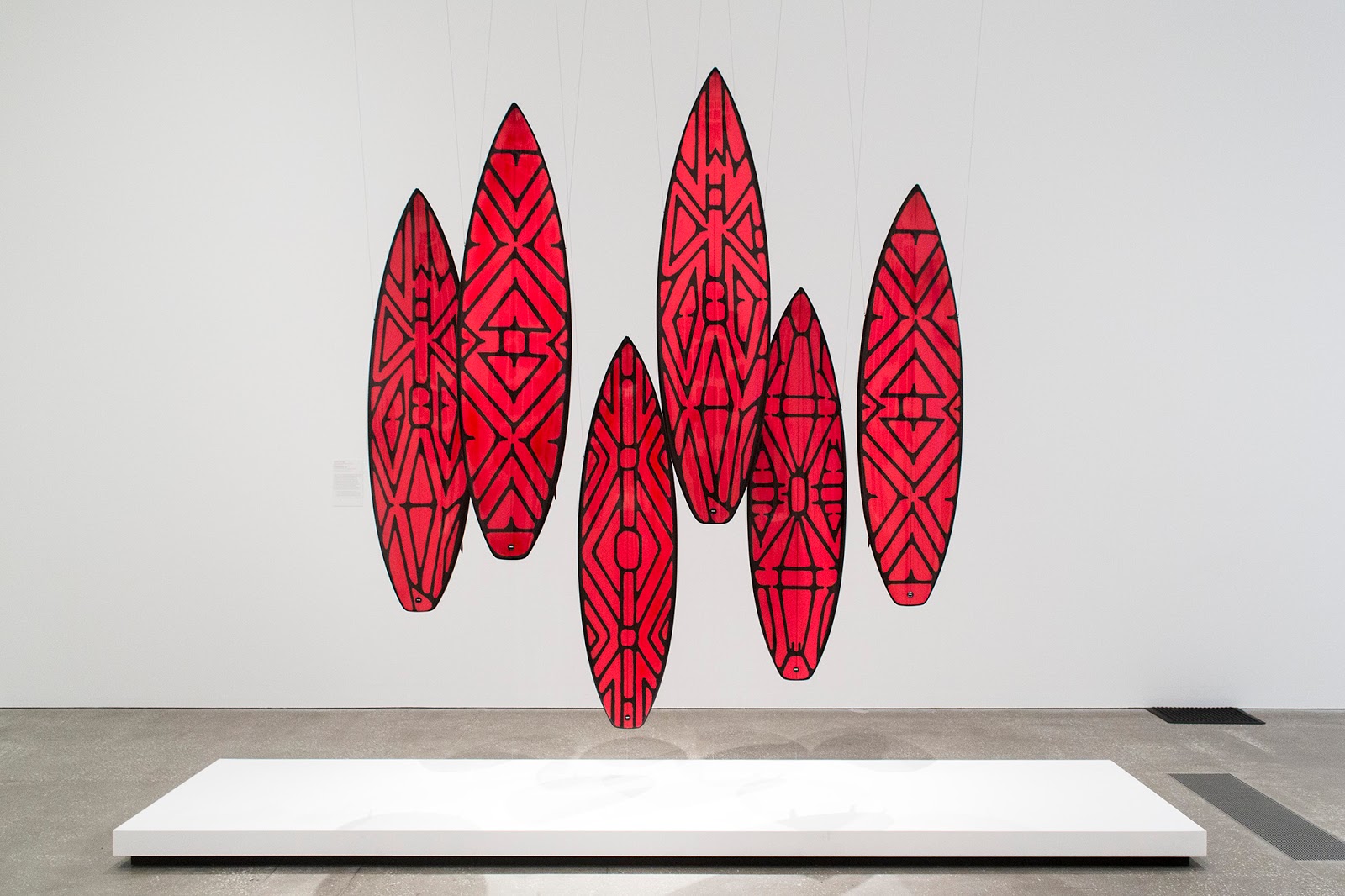
Andy Warhol and Ai Weiwei at National Gallery Victoria


Words/Images (35mm film): Saskia Edwards

There’s something kind of overwhelming about being in the presence of great artwork – that pangs you in the sternum and shortens your breath. You know that you’re looking at something that some exceptional person, who really sees things, created. That’s certainly true of Ai Weiwei and Andy Warhol at the National Gallery of Victoria. In a way, it’s oppressive because you want to absorb it and appreciate it all.

However, this is probably truer of Ai Weiwei’s works. Of course, Andy Warhol’s commentary on consumerism is strengthened by the fact that his own works were mass produced. But once you’ve seen his same pieces three, four, five times, it doesn’t feel very interesting. It’s kind of like taking a photo in front of the Eiffel Tower. In comparison, Ai Weiwei’s skill and aesthetic is much more intriguing. Plus it’s imbued with the political activism that Weiwei is known for. Overall, Weiwei’s works are much more dynamic and compel contemplation in a way that Warhol’s no longer do.

Throughout the exhibition, it’s hard not to question why these two artists were put together.  There are seemingly obvious, but meaningless, links – both artists look at Mao, flowers or mug shots. There doesn’t really feel like a point to the pairing. Sometimes it’s interesting to see the contrast between their treatments of a subject. However, I don’t think either artist enhanced each other.

What I think I took away from the exhibition was a greater appreciation for Weiwei. You really get the sense that he’s a great artist. His work shows his broad range of interests (sculpture, photography, painting), his clever approach and his cunning examination of China’s politics and culture. But more than that, he’s brave. Ai Weiwei is brave in a way that Andy Warhol never was. He stands chest ballooned against one of the most authoritarian governments in the world and his work doesn’t bow to the trends of the art world. If you walk away with anything from this exhibition, it’s the understanding of the unrelenting and humble fearlessness of Ai Weiwei. Yeah, that’s bravery.


19 December 2015

Julian Meagher 'Alone in the Sun' at Edwina Corlette Gallery


Words: Saskia Edwards
Images: Jonathan Rae

I think everyone has had a moment where they become conscious, and feel very acutely, that they are a product of their parents. Maybe it’s your same fear of cats as your mother, or that you like your toast slightly burnt like your father, or that you’ll always vote Labor because they told you that’s what’s right. 

But more than these obvious, more tangible things, your parents can deeply and permanently instil in you your values, opinions and beliefs. And it’s only when you're spraying your neighbour’s Tabby with your garden hose do you realise it.

But what about their parents? And your parents’ parents’ parents? How has that influenced you?

Well, that’s what painter Julian Meagher is looking at. 

“I think we can all see traits of ourselves in our mum and dad and, then I’m looking at further, well they’ve obviously got their parents in them as well,” he told me.

“We all must inherit something and as a nation, we have these shared traits as well - our love of drinking, our love of the beach, our identity, what makes us who we are?

“And I think as you get older, you start to look back and ask, ‘Why am I, who I am? Why do I have these values? And why do I react in these ways?’”

The hero piece of this series, ‘Alone In The Sun’, is a shadowy image of a group of turn-of-the-century women. They pose for a photo in an austere style with seemingly transparent faces. It has the same feeling as Jane Campion’s ‘The Piano’. It’s eerie and also distant. These women are Julian’s ancestors. 

“I was at christmas dinner and I looked at the wall and there was the really powerful ghost-like image of these women from the early 1900s and I said, ‘who’s this?’, and she [Julian’s mother] said, ‘It’s your great-great grandma who lived out in the bush’.

“I’d never seen this image and they were so ghostly, it was such a powerful image.”

Julian also looks specifically at the relationship between drinking in Australia and our ancestry. 

“I started looking at broader things around masculinity and Australian identity years ago with drinking culture and things because I like painting bottles.”

In this series there are paintings of bottles, some fallen, others acting as vases for native Australian flowers. They are symbols for our uniquely Australian relationship with alcohol.

“In other countries, for example in Italy, if you get too drunk, you dishonour the family, in Australia the more drunk you get, the more honour you bring.

“Our Prime Minister holds the record for sculling a beer, our famous cricketer David Boon holds the record for drinking 52 tinnies on a flight to London. They’re our heroes.

“It’s very engrained in our culture because Australia’s very isolated, it’s all about how tough you are, how stoic you are.”

It’s worth noting here, that Julian hasn’t always been an artist. In fact, he’s still a registered doctor. 

“The switch is easy, having a career as an artist is the hard part.

“I think it’s way harder to be an artist than to be a doctor to be honest.

“To keep creating the works, it’s such an unstable career. Art is very difficult financially, particularly in early years and it’s a very, very tough road and it’s quite a solitary thing.”

His works are influenced by his medical career. His painting is very clinical. He’s “no wild, crazy artist”. And it is evident in his clean, precise works, that really do examine history, drinking and identity.

So, are we ‘Alone in the Sun’? Really, we’re not alone. We’re the combination of thousands of ancestors, people we’ll never know, but who have shaped us.


23 August 2015

Contemporary Queensland Artists at GOMA Q: Spotlight on Sam Cranstoun


Words: Saskia Edwards
Images: Jonathan Rae

Lord Louis Mountbatten - the cousin of the Queen - was responsible for funding an affordable braille typewriter, developing a particular shade of pink and was a supporter of a military ship made from ice and wood pulp. 

Then, in 1979, he was assassinated by the IRA. They blew up a fishing boat he and was aboard off the coast of the Irish town Mullaghmore.

Sam Cranstoun remembers this quizzical and benevolent royal in his works at GOMA Q. 

“I came across this figure Mountbatten who was connected to the British royal family, but also connected to the Russian royal family.

“All of these little stories kept presenting themselves and they were just increasingly fascinating.

Perhaps Mountbatten was also motivated to think up these schemes by a desire to prove his relevance as a royal. It was an era where the divine rights of the monarchy were being questioned. Hence it’s possible that Mountbatten was attempting to justify his position through, somewhat misguided, ingenuity.

“He really was clearly striving to do good things. They were incredibly earnest.

“A lot of them were quite ridiculous and outlandish, but they were all really based in fascination with innovation, but also by having a military edge.”

Sam’s exploration of the Mountbatten narrative manifested itself in three ways. Firstly, a flag dipped in Mountbatten pink - a mauve hue he thought would be an effective camouflaging colour for the military (but was probably a bit too fabulous). Secondly, a canvas punched with braille. It reads “remember in spite of everything he was a great man”.

“There was a biographer that was writing the official Mountbatten biography and he did exhaustive research through his archives and work with him directly.

“And apparently Mount Batten had quite a flair for exaggerating his role in history.

“This biographer, his whole life was made exceedingly difficult by the fact that we would hear the story and find out the story from Mountbatten and then would have to perform more research to actually determine if that was actually true or not that was an incredibly frustrating for him.

“To the point where he actually made a plaque that was his own personal mantra that said, ‘remember in spite of everything he was a great man’.”

And finally, a film. Sam travelled to Mullaghmore, the site of Mountbatten’s murder, to trace his final days and examine the scar the event left on the town.

“It’s fair enough and it’s justifiable and understandable that they [the IRA] wanted their own country and that they wanted to take it back for themselves.

“But then the way they went about doing it was so morally bankrupt it was so wrong, the way that they would kill innocent people just to bring attention to their cause.”

“I was interested in how my relationship with the story would actually change by visiting Mullahgmore.

“One of the things that I thought would be an interesting activity while I was there was to actually go out in a boat and see the waters that he would have seen everyday and seen while he was killed.”

The video is quite soft and placid - it follows the rolling landscape of Mullaghmore - that is often interrupted by the monolithic Classiebawn Castle. And there always seems to be a faint serene wind. But it’s like the town has a thin film of serenity enveloping a much greater turmoil.

Sam contacted a charter boat company about taking a trip around the idyllic peninsula. They couldn’t take him, but the operator actually knew Mountbatten. In fact, she maintained his boat for a decade and was familiar with him. Sam spoke to her over two days about the assassination, Mountbatten and how the event has shaped the town. It was, quite obviously, an emotionally charged issue for her - with her regularly breaking down during the interview.

“I was very aware that clearly this isn’t something that has just disappeared and it wasn’t just going to disappear – it was a story that was forever linked to the town.

“I knew it was something that preoccupied her quite a lot, but I didn’t expect her to be quite as emotional as she was.”

Sam’s series was quite sombre. But simultaneously quite meditative. It shows, through a very specific window, how one person can become the epicentre of so many peripheral issues (modern royalty, the War of Independence, the military). And it shows how the waves of one person’s life have carved permanent grooves in many people’s minds. 

Here's some of the other works by contemporary Queensland artists on show at GOMA Q.


27 June 2015

Quaternary exhibition at QUT Art Museum


Words: Saskia Edwards
Images: Jonathan Rae
Artworks: Bianca Beetson, Chantal Fraser, Rachael Haynes, Natalya Hughes, Alice Lang, Gemma Smith, and Jemima Wyman

Bianca Beetson says “we were all born pink, even when a dark baby is born, it’s still pink at first”.

And it’s that colour, which is so deeply imbued with meaning, that underpins Bianca’s work.

“I was a bit of a tomboy growing up and my mother, I remember her, as a last ditch attempt putting me in this pink bedroom,” says Bianca.

“It had pink clouds on the wallpaper and on the bedspread. And I really don’t like the colour pink.

“I ended up reclaiming pink in many ways and my hatred for pink became about anger and how pink’s not necessarily this insipid colour that’s associated with girls it can actually be quite powerful.”

Bianca’s self portraits at QUT’s Quaternary exhibition are bathed in fuchsia, blush and coral. Her costume changes from soldier, to barbarian to bohemian. It’s kind of this strange journey of mercurial magenta identity. And Bianca’s wrestle with identity is inexplicably linked to her aboriginality that of course is steeped in complex history and politics. 

“I always struggled with this thing of, who am I? and being pigeon-holed and people expecting you to act and behave in a certain way.

“And I think back to my uni days and I’d turned up nearly every day dressed as a completely different person because just when someone had thought that they had got me figured out... where to put me, I would shift.”

The pink in Bianca’s practice extends beyond femininity and self-perception. It looks at the “artificiality” of Australian history and “the way that pink sort of signifies this candy-coating”.

“I talk about sugar-coating poo and you can even sugar-coat poo that much and make it palatable.

“And at the end of the day it’s still poo.

“‘Let’s cover it up, let’s sweeten it’, but the problem doesn’t go away.”

Bianca has looked even further into that richly emblematic colour and found the concept of assimilation. Bianca’s grandmother was a domestic in Cherbourg where she “was taught to be a good woman, a good cleaner, a good cook, to stitch and sow and do all of those domestic things”. For Bianca, this represents the assimilation of her culture, heritage in family.

In the end, history, gender, identity: they're not white washed, they're pink washed.


17 June 2015

'Imagine Being Attractive': Emily McGuire at Jugglers Art Space


Words: Saskia Edwards
Images: Jonathan Rae

‘I just want to be profound and gorgeous’.

Someone actually wrote that on Tumblr. 

And for anyone who’s sifted through the cacophony of Tumblrs - that effectively amount to photos of Cara Delevingne, shitty quality lo-fi webcam selfies and F. Scott Fitzgerald quotes - then this idea probably isn’t foreign.

Female fashion Tumblrs are the focus of Emily McGuire’s ‘Imagine Being Attractive’ exhibition at Juggler’s Art Space. It’s an extension of her Honours thesis, which basically found:

“On the one hand you feel empowered because you’re like, ‘I’m blogging, I can do whatever I want, pick whatever I want, post whatever I want, I can be anonymous, I can be not anonymous, I do whatever I want with my blog’.

“Even Tumblr says, you can literally quote ‘customise everything’.

“So it makes you feel like you’re really empowered.

“But the irony is that you’re blogging this really homogenous mainstream identity.

“Tumblr blogs try and appear smart funny and attractive, but the irony is that it’s often reposted or re-found images from various fashion magazines.

“So of course these archetypal weird fashion blogs are just going to repeat what’s in the media.”

It’s kind of a sad conclusion. That these blogs, that people spend countless hours manicuring to represent their individuality, often do the opposite. In fact, they’re just absorbed into an abyss of Tumblrs that can be reduced to: ‘hot chicks with emotional issues’. 

But it’s easy to be cynical about Tumblr. Of course it’s a site “populated by young people”. And who can’t say they didn’t listen to Nirvana, salivate over a copy of Vogue and look listlessly into the distance thinking, ‘no one understands my deep turmoil as a white skinny middle-class teenager’ (or some variation of this). It just wasn’t on a blog. Let’s just say there comes a point in life where you wrack your brain for your Myspace password hoping that you never get a high enough profile that someone writes an article about it. 

“Blogs like Tumblr are just a new way to find identity and in that search realise that it’s never found,” says Emily.

“So it’s the same with clothing, you get dressed every day and every day you’re trying to figure out what am I going to wear, who am I, what am I doing with fashion, or how am I going to express myself in clothing.

“And it’s a process that has no end. 

“My whole project parallels the way people use images on Tumblr to perform identity and the way fashion also constructs identity as a performance on the surface of the body.”

These ideas manifest themselves in two ways at Emily’s exhibition. Some of her works substitute archetypal images found on Tumblr for text. For example, the words ‘Bored Looking Girl in Designer Clothes’ or ‘An Oil Painting of Some Flowers’. The kind of crap that Tumblr is almost haemorrhaging. And secondly, Emily also used actual text found on Tumblr. 

“People have actually written that on Tumblr and posted it among all these fashion images on their blog.

“It’s like this weird self-deprecating irony.

“On one hand they’re affirming this beautiful identity and on the other hand they’re critiquing it at the same time.”

Why do people write these things or post the images that they do? Well apparently that’s a question for a PhD.

But if you think about it long enough, what happens on Tumblr kind of applies to us all. In a depressing and paradoxical way: in the search for individuality, we’re all being caught in a web of sameness. 


7 June 2015

Amber Wallis and Ari Athans at Edwina Corlette Gallery

 
Words: Saskia Edwards
Images: Jonathan Rae

The uncanny was a concept first characterised by Sigmund Freud in his essay Das Unheimliche. It’s that feeling when something looks simultaneously distinctly familiar and distinctly unfamiliar. It’s probably how you felt when you watched The Polar Express or saw a RealDoll or maybe that time you went to Madame Tussauds.

Within Amber Wallis’ work the uncanny takes on a different shape. In her paintings you catch glimpses of recognisable forms - a cactus, palm trees, clouds. But at the same time they look totally alien; like the landscapes have been melted, contorted and warped.

“A lot of people can read what they want into it and they might see objects or land or sex or what have you,” says Amber.

“And I think that’s an interesting place because it’s kind of neither here nor there. So then it’s not super obvious.

“I find straight portraiture or straight landscape, I just get a bit bored of it. If I’m painting myself, it’s something that gets a bit stuck for me.

“So I do like that space where things are a little bit confusing.”

Amber’s works tread the precarious line of representation and abstraction. Forms often fall off the precipice of reality into a more visceral interpretation of the objects or landscapes. It’s also a method of Australian artist Ken Whisson.

“I just love the way he composes his imagery and especially his earlier works.

“There’s just something, that line between abstraction and representation, and once you’re going down that path it does become about the painting and the formal qualities of it and I just think he nailed it, I just think he’s an amazing painter.”

Inherent in Amber’s works is her emotional state. Her mother died a few years ago and that grief has been laced through her process.

“Well you go through big heavy grief stuff you get very aware of the preciousness of life, the fragility of it.

“I think thematically, I was thinking of my mum and a lot of the objects she used to have around the house.

“She used to be a ceramics artist and in the back of my mind, I was sort of thinking of that stuff.

“I don’t think it shows in the work that much, but I know that it’s been created in that space.”

In validation of her talent, Amber was awarded the Brett Whiteley Travelling Art Scholarship.

“It meant that I have continued to have an art career one way or another.

“It really changed my life, enabled me to travel and be funded while I travel and make art for the first time in a full-time capacity for a certain amount of time.”


Now Amber is preparing for the Sydney Contemporary in September. But for now you can see her exhibition at Edwina Corlette Gallery. And really, you can see whatever you want in the uncanny. 


20 March 2015

A view from David Lynch: Between Two Worlds exhibition at GOMA and talk at QPAC


Words: Saskia Edwards
Images: Jonathan Rae
Artwork: David Lynch

David Lynch sits on a cubic leather chair across from another David, David Stratton.

And in QPAC’s Concert Hall it seems fittingly bizarre and cinematic.

Giant copper-coloured organ pipes hang over the two greats of film and the stage is dressed for a performance by the Queensland Symphony Orchestra (or as David Stratton accidentally called it ‘the Queensland Sympathy Orchestra’).

Their bodies are a complete contrast. David Stratton sits back languidly with his legs crossed (exposing his socks) while Lynch hunches forward and rests his elbows on the arms of the chair, holding his microphone in two hands.

David Lynch looks almost exactly like I expected, if not a little shorter and softer: a tsunami-like quiff sits on his head like a tuft on an exotic bird. And he wears a black suit with a slim tie - his collar a little skew-whiff.

The audience is coated in red light, somewhat like the red room.

And of course, the crowd is littered with Lynch diehards who have come to congregate in the presence of their strange deity. They’re all dressed in their most eccentric outfits - some channelling Audrey Horne, others Henry Spencer. 

Lynch begins by talking about ideas - something he brings up a lot. You come to realise obscure ideas like “a dead girl”, “a severed ear” and a “moving painting” are the premises for some of his greatest works.

“The best thing in the world is ideas,” says Lynch.

“None of us do anything without an idea - even if you look in the cupboard and there’s no coffee, you get an idea to go to the store and get some coffee.

“So there’s ideas for everything. And I love to try to take ideas and catch an idea that I fall in love with. And then I know exactly what to do.

“Stay true to that idea and translate it to one medium or another.”

When Lynch is answering he looks almost pained. His eyes are tightly closed, his brow furrowed, like he’s trying to conjure an image of what he’s saying in his mind. It’s the way you would if you had to describe someone in a facial composite. And at times he grasps his right hand in front of him when he talks as if he’s trying to hold onto a concept or grope his way around its silhouette.

Stratton goes on to ask Lynch about his transcendental meditation practice.

“Each of everyone of us human beings has I feel within us a treasury within us,” he says.

“This treasury is known by many names, but it’s like an ocean of pure consciousness - pure bliss. Unbounded, this field is. Unbounded, infinitive, eternal, immutable, immortal consciousness...

“Within everyone of us is unbounded intelligence, unbounded creativity, bliss, happiness, love, energy and peace.”

And David Lynch’s intonation is almost meditative itself as he speaks in a distinct fluid phrasing. His voice is somewhere between John Wayne and Stan Lee.

The talk is dotted with little intimate insights into Lynch’s career. Like the time Mel Brooks was given the script for ‘The Elephant Man’.

“Fate plays a huge role in our lives. No one would believe that someone would pick me and Eraserhead to do a Victorian drama...

“Mel is a very interesting fellow and he’s an abstract thinker.

“He loved it [The Elephant Man script] and he said, ‘you’re in you’re in you’re in and who is this David Lynch?’

“And they said ‘Mel, you’ve got to see Eraserhead’ and so I said, ‘Listen guys, it’s been great knowing you’.

“So Mel watched it and after the screening they made me come to his room...

“And the doors burst open and Mel was running toward me and embracing me and said, ‘I love you, you’re a mad man’.”

Then there was this anecdote about dancing with Federico Fellini’s wife Giulietta Masina at the premier of ‘Blue Velvet’.

“I got to dance with Giulietta Masina on opening night in Montreal.

“We opened the dancing of this party, dancing together, it was so beautiful, such a beautiful soul she was.

“Imagine that.” 

Some of Lynch’s answers are less formed. Kind of like a stream of consciousness that no one else really understands. At the end of a lot of the responses David Stratton pauses, seemingly thinking, ‘Is that it?’.

But a there's a little bit of sadness for Twin Peaks fans; Lynch can’t confirm a new season. He say he’d been writing the script for four years and had been in contract negotiations for a year, but nothing had been finalised.

An arc of David Lynch’s talk is that he refused to comment on the meaning of his work. Like every viewer had to bring their own interpretation of the pieces and he wouldn’t interfere with that perspective.

But he also spoke about what it’s like to complete a project.

“Nothing is ever really perfect, but it’s finished and it feels complete and then there’s a very good feeling and it opens the door to the future.

“Until a thing is finished, you can’t really think to much about other things. So when a thing is finished a door is opened and you start thinking about new things.”

In the end, I left the talk with ideas whirring in my head; animated by David Lynch’s mysterious and complicated imagination. 


Perhaps it’s much like the maestro’s movies, and unlike the gel-capsule-coated films of Hollywood; you can never really walk away from a David Lynch.