
Showing posts with label film. Show all posts
Showing posts with label film. Show all posts


18 January 2016
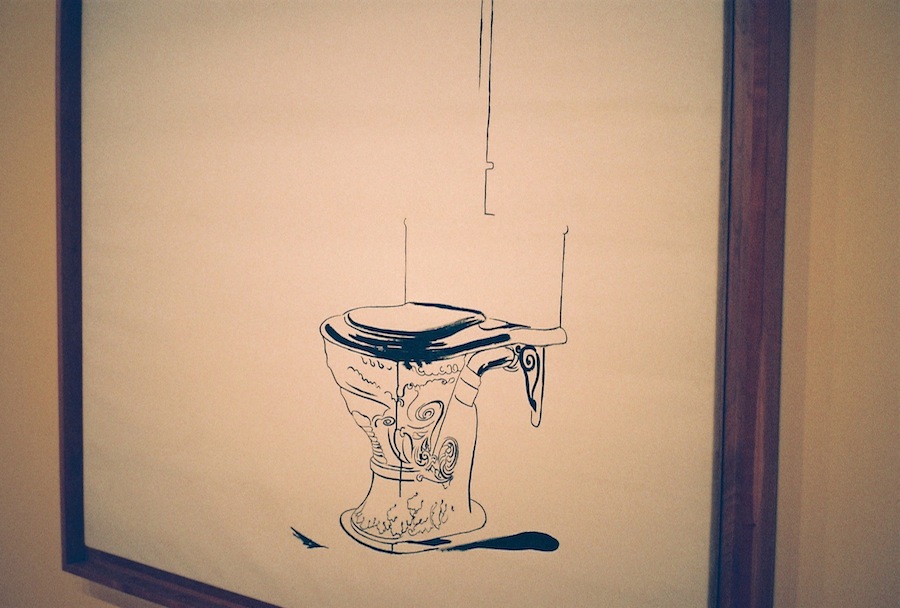
Andy Warhol and Ai Weiwei at National Gallery Victoria

Words/Images (35mm film): Saskia Edwards
There’s something kind of overwhelming about being in the
presence of great artwork – that pangs you in the sternum and shortens your
breath. You know that you’re looking at something that some exceptional person,
who really sees things, created. That’s certainly true of Ai Weiwei and Andy
Warhol at the National Gallery of Victoria. In a way, it’s oppressive because
you want to absorb it and appreciate it all.
However, this is probably truer of Ai Weiwei’s works. Of course,
Andy Warhol’s commentary on consumerism is strengthened by the fact that his
own works were mass produced. But once you’ve seen his same pieces three, four,
five times, it doesn’t feel very interesting. It’s kind of like taking a photo
in front of the Eiffel Tower. In comparison, Ai Weiwei’s skill and aesthetic is
much more intriguing. Plus it’s imbued with the political activism that Weiwei
is known for. Overall, Weiwei’s works are much more dynamic and compel
contemplation in a way that Warhol’s no longer do.
Throughout the exhibition, it’s hard not to question why
these two artists were put together. There are seemingly obvious, but meaningless, links
– both artists look at Mao, flowers or mug shots. There doesn’t really feel
like a point to the pairing. Sometimes it’s interesting to see the contrast
between their treatments of a subject. However, I don’t think either artist
enhanced each other.
What I think I took away from the exhibition was a greater
appreciation for Weiwei. You really get the sense that he’s a great artist. His work shows his broad range of interests (sculpture, photography, painting), his
clever approach and his cunning examination of China’s politics and culture.
But more than that, he’s brave. Ai Weiwei is brave in a way that Andy Warhol
never was. He stands chest ballooned against one of the most authoritarian
governments in the world and his work doesn’t bow to the trends of the art
world. If you walk away with anything from this exhibition, it’s the
understanding of the unrelenting and humble fearlessness of Ai Weiwei. Yeah,
that’s bravery.




23 August 2015
Contemporary Queensland Artists at GOMA Q: Spotlight on Sam Cranstoun

Words: Saskia Edwards
Images: Jonathan Rae
Lord Louis Mountbatten - the cousin of the Queen - was responsible for funding an affordable braille typewriter, developing a particular shade of pink and was a supporter of a military ship made from ice and wood pulp.
Then, in 1979, he was assassinated by the IRA. They blew up a fishing boat he and was aboard off the coast of the Irish town Mullaghmore.
Sam Cranstoun remembers this quizzical and benevolent royal in his works at GOMA Q.
“I came across this figure Mountbatten who was connected to the British royal family, but also connected to the Russian royal family.
“All of these little stories kept presenting themselves and they were just increasingly fascinating.
Perhaps Mountbatten was also motivated to think up these schemes by a desire to prove his relevance as a royal. It was an era where the divine rights of the monarchy were being questioned. Hence it’s possible that Mountbatten was attempting to justify his position through, somewhat misguided, ingenuity.
“He really was clearly striving to do good things. They were incredibly earnest.
“A lot of them were quite ridiculous and outlandish, but they were all really based in fascination with innovation, but also by having a military edge.”
Sam’s exploration of the Mountbatten narrative manifested itself in three ways. Firstly, a flag dipped in Mountbatten pink - a mauve hue he thought would be an effective camouflaging colour for the military (but was probably a bit too fabulous). Secondly, a canvas punched with braille. It reads “remember in spite of everything he was a great man”.
“There was a biographer that was writing the official Mountbatten biography and he did exhaustive research through his archives and work with him directly.
“And apparently Mount Batten had quite a flair for exaggerating his role in history.
“This biographer, his whole life was made exceedingly difficult by the fact that we would hear the story and find out the story from Mountbatten and then would have to perform more research to actually determine if that was actually true or not that was an incredibly frustrating for him.
“To the point where he actually made a plaque that was his own personal mantra that said, ‘remember in spite of everything he was a great man’.”
And finally, a film. Sam travelled to Mullaghmore, the site of Mountbatten’s murder, to trace his final days and examine the scar the event left on the town.
“It’s fair enough and it’s justifiable and understandable that they [the IRA] wanted their own country and that they wanted to take it back for themselves.
“But then the way they went about doing it was so morally bankrupt it was so wrong, the way that they would kill innocent people just to bring attention to their cause.”
“I was interested in how my relationship with the story would actually change by visiting Mullahgmore.
“One of the things that I thought would be an interesting activity while I was there was to actually go out in a boat and see the waters that he would have seen everyday and seen while he was killed.”
The video is quite soft and placid - it follows the rolling landscape of Mullaghmore - that is often interrupted by the monolithic Classiebawn Castle. And there always seems to be a faint serene wind. But it’s like the town has a thin film of serenity enveloping a much greater turmoil.
Sam contacted a charter boat company about taking a trip around the idyllic peninsula. They couldn’t take him, but the operator actually knew Mountbatten. In fact, she maintained his boat for a decade and was familiar with him. Sam spoke to her over two days about the assassination, Mountbatten and how the event has shaped the town. It was, quite obviously, an emotionally charged issue for her - with her regularly breaking down during the interview.
“I was very aware that clearly this isn’t something that has just disappeared and it wasn’t just going to disappear – it was a story that was forever linked to the town.
“I knew it was something that preoccupied her quite a lot, but I didn’t expect her to be quite as emotional as she was.”
Sam’s series was quite sombre. But simultaneously quite meditative. It shows, through a very specific window, how one person can become the epicentre of so many peripheral issues (modern royalty, the War of Independence, the military). And it shows how the waves of one person’s life have carved permanent grooves in many people’s minds.
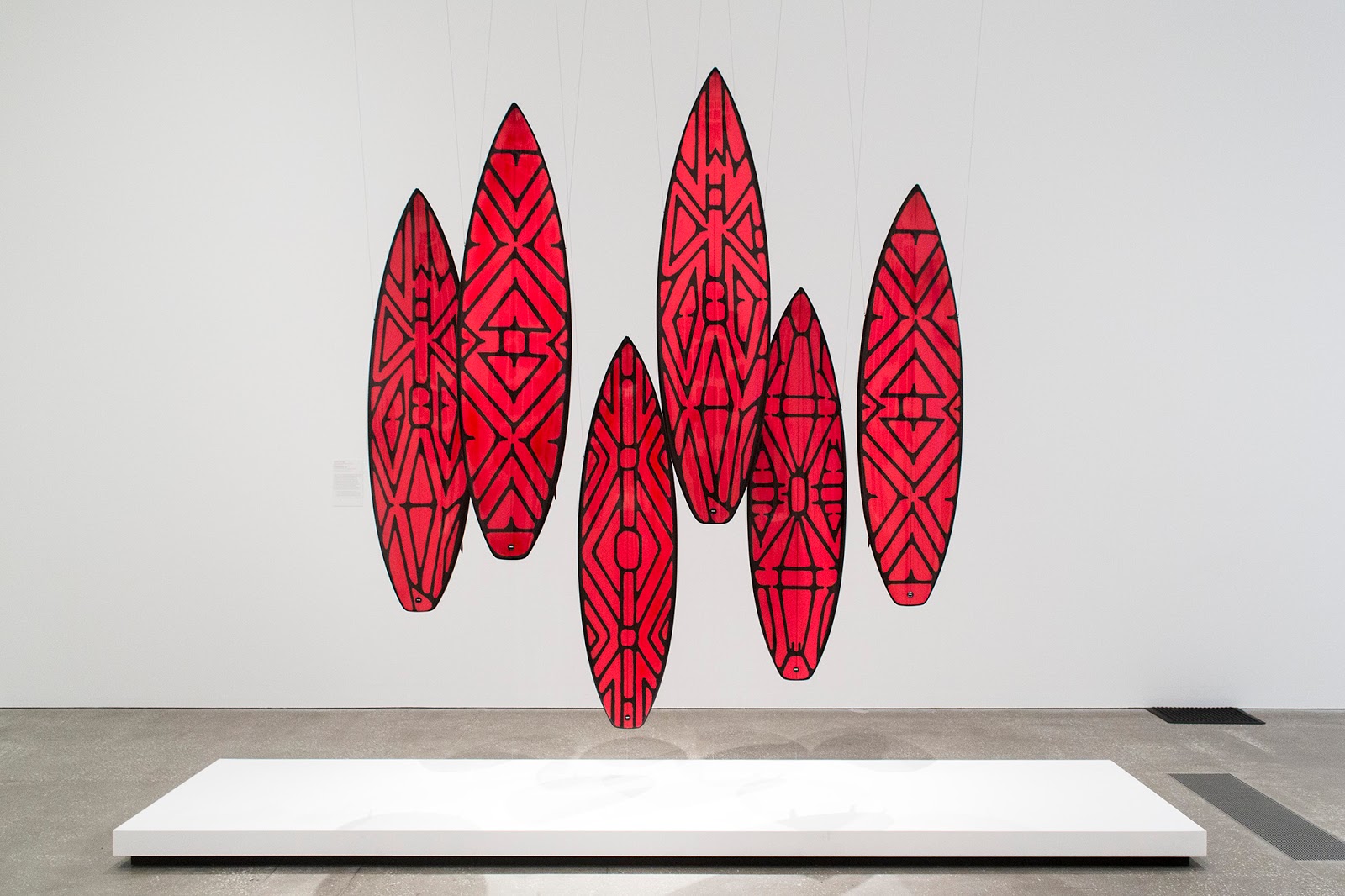
Here's some of the other works by contemporary Queensland artists on show at GOMA Q.


15 May 2015
Return to Backwater Broadshore
Images/Creative Direction: Jonathan Rae
Styling/Creative Direction: Saskia Edwards
Styling: Jewel Horton
Directing/DOP: Jye Wordsworth
Modelling: Rachel Woodall @ Busy


20 March 2015
A view from David Lynch: Between Two Worlds exhibition at GOMA and talk at QPAC

Words: Saskia Edwards
Images: Jonathan Rae
Artwork: David Lynch
David Lynch sits on a cubic leather chair across from another David, David Stratton.
And in QPAC’s Concert Hall it seems fittingly bizarre and cinematic.
Giant copper-coloured organ pipes hang over the two greats of film and the stage is dressed for a performance by the Queensland Symphony Orchestra (or as David Stratton accidentally called it ‘the Queensland Sympathy Orchestra’).
Their bodies are a complete contrast. David Stratton sits back languidly with his legs crossed (exposing his socks) while Lynch hunches forward and rests his elbows on the arms of the chair, holding his microphone in two hands.
David Lynch looks almost exactly like I expected, if not a little shorter and softer: a tsunami-like quiff sits on his head like a tuft on an exotic bird. And he wears a black suit with a slim tie - his collar a little skew-whiff.
The audience is coated in red light, somewhat like the red room.
And of course, the crowd is littered with Lynch diehards who have come to congregate in the presence of their strange deity. They’re all dressed in their most eccentric outfits - some channelling Audrey Horne, others Henry Spencer.
Lynch begins by talking about ideas - something he brings up a lot. You come to realise obscure ideas like “a dead girl”, “a severed ear” and a “moving painting” are the premises for some of his greatest works.
“The best thing in the world is ideas,” says Lynch.
“None of us do anything without an idea - even if you look in the cupboard and there’s no coffee, you get an idea to go to the store and get some coffee.
“So there’s ideas for everything. And I love to try to take ideas and catch an idea that I fall in love with. And then I know exactly what to do.
“Stay true to that idea and translate it to one medium or another.”
When Lynch is answering he looks almost pained. His eyes are tightly closed, his brow furrowed, like he’s trying to conjure an image of what he’s saying in his mind. It’s the way you would if you had to describe someone in a facial composite. And at times he grasps his right hand in front of him when he talks as if he’s trying to hold onto a concept or grope his way around its silhouette.
Stratton goes on to ask Lynch about his transcendental meditation practice.
“Each of everyone of us human beings has I feel within us a treasury within us,” he says.
“This treasury is known by many names, but it’s like an ocean of pure consciousness - pure bliss. Unbounded, this field is. Unbounded, infinitive, eternal, immutable, immortal consciousness...
“Within everyone of us is unbounded intelligence, unbounded creativity, bliss, happiness, love, energy and peace.”
And David Lynch’s intonation is almost meditative itself as he speaks in a distinct fluid phrasing. His voice is somewhere between John Wayne and Stan Lee.
The talk is dotted with little intimate insights into Lynch’s career. Like the time Mel Brooks was given the script for ‘The Elephant Man’.
“Fate plays a huge role in our lives. No one would believe that someone would pick me and Eraserhead to do a Victorian drama...
“Mel is a very interesting fellow and he’s an abstract thinker.
“He loved it [The Elephant Man script] and he said, ‘you’re in you’re in you’re in and who is this David Lynch?’
“And they said ‘Mel, you’ve got to see Eraserhead’ and so I said, ‘Listen guys, it’s been great knowing you’.
“So Mel watched it and after the screening they made me come to his room...
“And the doors burst open and Mel was running toward me and embracing me and said, ‘I love you, you’re a mad man’.”
Then there was this anecdote about dancing with Federico Fellini’s wife Giulietta Masina at the premier of ‘Blue Velvet’.
“I got to dance with Giulietta Masina on opening night in Montreal.
“We opened the dancing of this party, dancing together, it was so beautiful, such a beautiful soul she was.
“Imagine that.”
Some of Lynch’s answers are less formed. Kind of like a stream of consciousness that no one else really understands. At the end of a lot of the responses David Stratton pauses, seemingly thinking, ‘Is that it?’.
But a there's a little bit of sadness for Twin Peaks fans; Lynch can’t confirm a new season. He say he’d been writing the script for four years and had been in contract negotiations for a year, but nothing had been finalised.
An arc of David Lynch’s talk is that he refused to comment on the meaning of his work. Like every viewer had to bring their own interpretation of the pieces and he wouldn’t interfere with that perspective.
But he also spoke about what it’s like to complete a project.
“Nothing is ever really perfect, but it’s finished and it feels complete and then there’s a very good feeling and it opens the door to the future.
“Until a thing is finished, you can’t really think to much about other things. So when a thing is finished a door is opened and you start thinking about new things.”
In the end, I left the talk with ideas whirring in my head; animated by David Lynch’s mysterious and complicated imagination.
Perhaps it’s much like the maestro’s movies, and unlike the gel-capsule-coated films of Hollywood; you can never really walk away from a David Lynch.
 |
 |
 |
 |
 |
 |
 | |
 |
15 April 2014
Danny Camara behind the scenes
Images: Saskia Edwards
Words: Saskia Edwards
Video: Danny Camara in collaboration with Aesthetic Fixation
For the record, Danny Camara’s surname is no joke. While it seems absurdly
coincidental that he’s a director and filmmaker, it’s no lame fabrication. But what is gospel is his ability to create incredible
cinematography. I got inside his brains here:
SE: What’s your all time favourite scene from a movie?
DC: The first one that comes to mind is the Greyhound Bus scene from
Royal Tenembaums when Margot Tenembaum is meeting Richie. It’s shot in slow-mo,
there’s stuff happening in the background, it’s a really nice moment. It’s one
of those real moments that great in movies where you really feel what’s
happening. Another that I re-watch that’s in Lost In Translation. There’s lots
of good scenes in that. There’s this scene where it’s just Scarlet Johansson in
her room just chilling doing nothing. In that movie there’s a lot of nothing
happening, but at the same there’s so much happening underneath, between the
lines. That’s what I like and that’s what I try to do.
SE: Directors sometimes have one thing that they constantly use in their
works – something like hyper-realism or long tracks or a particular style of
music. If you did have one, what would be your trademark?
DC: I guess from what I’ve done in the past and I haven’t planned it.
But I try to do something serious and it ends up becoming a little bit funny,
but it’s kind of black humour. So I guess mixing drama and comedy.
SE: If you were to have any cast you wanted, who would you pick?
DC: I just watched Thin Red Line by Terrence Malick last night and
Adrian Brody is in that. I’ve always had a bit of a man crush on him. For
actresses, I like Jennifer Lawrence. That’s the first one that comes to my
head.
SE: If you could shoot anywhere, where would you choose as a location?
DC: I guess my favourite place in the world that I’ve been to is
Barcelona. It’s a beautiful city, nice weather and lots of skating. So I guess
skating has a lot to do with it. I was thinking the other day I’d like to do a
non-shit film about skating or involving skating. So I guess Barcelona would be
a pretty good city.
SE: Tell me about how skating has influenced you to get into this line
of work or interjects with what you’re doing.
DC: I guess watching skate videos for hours each day when I was growing
up gave me a bit of an eye for making videos. Choosing angles, choosing music,
editing to music. A lot of stuff I learnt from making skate videos I apply to
my work today. I guess I'd like that influence to come across in my work, not
really sure how. I have booked jobs in the past because of being a skater, so
hopefully more of those!
SE: What kind of equipment do you like to work with?
DC: I would like to work with a better digital camera, but I just work
with a Cannon 5D mark iii. I play around with Super8, I just got a 16mm camera,
which I’m pretty excited about. I play around with my mentor’s Red Epic.


Disclaimer (FULL DISCLOSURE: The author has a personal relationship with Danny Camara)
Subscribe to:
Posts (Atom)